
16 min read
The Breakdown
<a href="#bill-you-didnt-expect" style=”display:block;color:#d4d4d4;text-decoration:none;font-size:14px;padding:6px 0;border-bottom:1px solid #1e1e1e;”>01 The Bill You Didn’t Expect02 The Surge Nobody Admits03 The Packaging Fee04 The Subscription Trick05 The Hidden Commission06 Six Dark Patterns07 Pricing Psychology Quiz08 What You Can Do09 The Verdict
You opened the app to order something simple. A pizza slice. The item costs ₹189.
By the time you hit confirm, you’re paying ₹242.
And that’s after the subscription discount kicks in.
You didn’t add anything. You didn’t upgrade anything. The app did it for you.
This is not a glitch. This is the business model.
The Bill You Didn’t Expect
Here’s a real breakdown, a single pizza slice ordered on a popular food app:
Price Breakdown
How a ₹189 Pizza Becomes ₹242
A 28% markup on the listed price. Without subscription: ₹277 (46% markup).
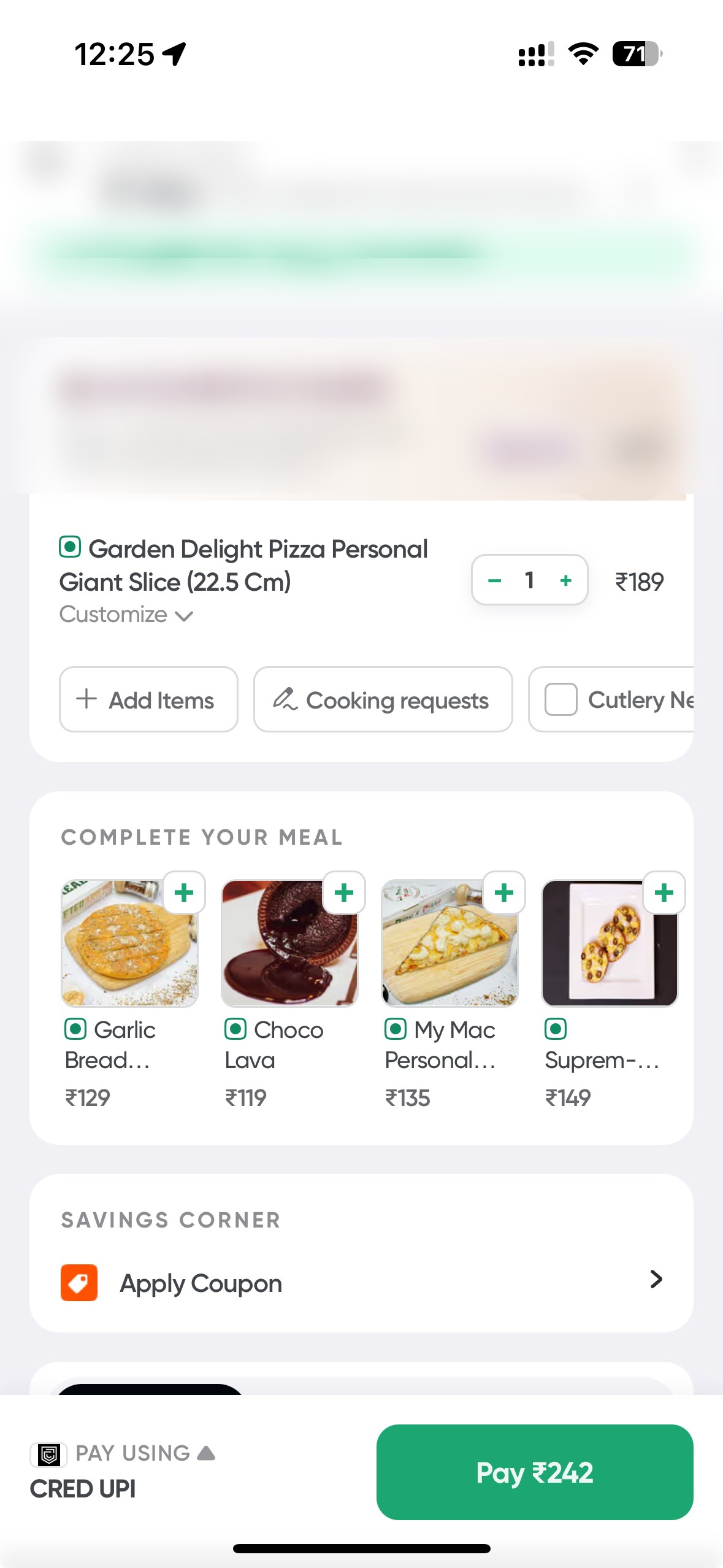
The listed price is not the real price. It’s an entry point. By the time you see the real number, you’ve already picked your food and waited on a loading screen. The psychological cost of going back is higher than just paying the difference. They know this. They designed it this way.
The Surge Nobody Admits Is Surge
The delivery fee on the same restaurant, same item, can vary by ₹20 to ₹60 depending on when you order. Order at 1pm on Tuesday? ₹29. Order at 8pm on Friday? ₹79.
Your food isn’t travelling further. What’s changed is demand. That’s surge pricing, it just doesn’t come with the honesty of being called surge pricing.
Spending Comparison
What You Think You Spend vs What You Actually Spend
Same pizza. Four different prices. None of them obvious at the point of decision.
The “rain fee” during monsoon sounds like compensation for delivery partners. Some of it probably is. It’s also a mechanism to charge more when bad weather means you’re less likely to step out.
The Packaging Fee: What You’re Actually Paying For
In 2022, apps started adding packaging fees. The justification: eco-friendly packaging costs more. True. Doesn’t explain why the fee goes to the platform and not the restaurant.
In many documented cases, packaging fees are additional platform revenue with a sympathetic name. Zomato processes over 700,000 orders a day. At ₹10 average, that’s ₹7 crore per day in packaging fee revenue alone.
The platform fee doesn’t even pretend to cover something specific. It started at ₹2, then ₹3, then ₹5. It will keep increasing.
The Subscription Trick
Subscription plans appear at the moment of maximum frustration: the checkout screen. “Save ₹35 with benefits.” While you’re already irritated about the fees. And if you want more savings? There’s an upgrade to a pricier plan, also on the checkout screen, also right now.
Psychological Triggers
The Pricing Psychology Playbook
You’ve already picked your food and waited. Going back feels like wasted effort.
₹189 is the anchor. ₹242 feels “close enough.” The real comparison (₹160 dine-in) is hidden.
“Save ₹35!” frames the subscription as avoiding loss, not making a purchase.
Once subscribed, you order more to “get your money’s worth.” Occasional user becomes habitual.
What the banner doesn’t mention: the break-even analysis. It shows you one number, what you save right now, designed to get you to subscribe in 30 seconds, not make a rational decision.
Once subscribed, users order more frequently. The subscription creates pressure to get value from it. You’ve already paid. You might as well order. Occasional user converted to habitual one.
The Commission Nobody Talks About
Restaurants pay 15 to 30% commission per order. To survive, many price their delivery menu 10 to 20% higher than the dine-in menu. So the ₹189 pizza you ordered might cost ₹160 if you walked in.
Then the platform adds its fees on top. You’re paying the restaurant’s commission and the platform’s fees simultaneously, both invisible in how they’re presented.
The System
The customer pays the platform’s fee. The customer also pays the restaurant’s commission (baked into higher menu prices). The customer pays twice, and sees neither charge labelled honestly.
Six Dark Patterns Worth Knowing
Dark Patterns
The Six Tactics Working Against You
Pre-Selected Add-Ons
Items ticked by default, requiring you to actively remove them.
“Complete Your Meal”
Add-on suggestions right as you confirm. All priced to seem small.
Late Fee Reveal
Full breakdown appears only at payment, after you’ve done all the work.
Savings Framing
“₹35 saved!” shown big. The fees making your total ₹242 are quiet.
Free Delivery Threshold
You add a ₹79 item to avoid a ₹29 fee. Net spend: ₹50 more.
Hunger-Timed Notifications
Alerts at 12-1pm and 7-8pm. Hungry people make worse financial decisions.
Are You Falling for Pricing Psychology?
Answer these five questions honestly. Your result updates instantly.
Interactive Diagnostic
Pricing Psychology Awareness Check
Click a score for each question. Your result updates instantly.
Question 1: Fee Awareness
Do you check the full fee breakdown before confirming your food order?
Always check
Question 2: Subscription Value
Have you actually calculated whether your food app subscription saves you money?
Done the math
Question 3: Upsell Resistance
How often do you add items from the “Complete Your Meal” section?
Never
Question 4: Time-Based Ordering
Do you check delivery fees at different times before ordering?
Always compare
Question 5: Direct Ordering
Do you order directly from restaurants (WhatsApp, phone) to avoid platform fees?
Regularly
Answer all 5 questions to see your result
What You Can Actually Do
Check the fee before you start browsing. Both apps show an estimated delivery fee before you enter a menu.
Calculate subscription value honestly. More than five orders a month at ₹300+? A subscription probably pays off. Twice a month? It probably doesn’t.
Order directly when possible. Many restaurants offer WhatsApp ordering. No platform commission means lower prices for you.
Ignore the “Complete Your Meal” section. It exists to increase your order value, not improve your meal.
13 min read
The Verdict
A ₹189 pizza. ₹242 at checkout. After a subscription discount. With a ₹299 upgrade offer placed right where your thumb lands.
None of this happened by accident.
Each fee was introduced quietly, small enough that complaining felt disproportionate. Each upsell was A/B tested until it worked. Each dark pattern was validated by the numbers. The system isn’t broken, it’s working exactly as intended.
Knowing this won’t save you money automatically. But it changes the game.
The same trade-off plays out at the brand level too, when platforms prioritise fee extraction over experience, the brand equity damage compounds. Read our analysis of how Snapdeal lost a $6.5 billion valuation by making exactly this choice.
Or just call the restaurant and pick it up yourself.
If you want to see what it looks like when an Indian brand gets advertising right instead, read our breakdown of how Asian Paints built genuine equity through IPL advertising, the contrast is instructive.
Sources: Zomato Annual Report FY2024; Swiggy DRHP 2024, SEBI filing; LocalCircles Dark Patterns in Consumer Apps Survey, 2023.

7 Comments