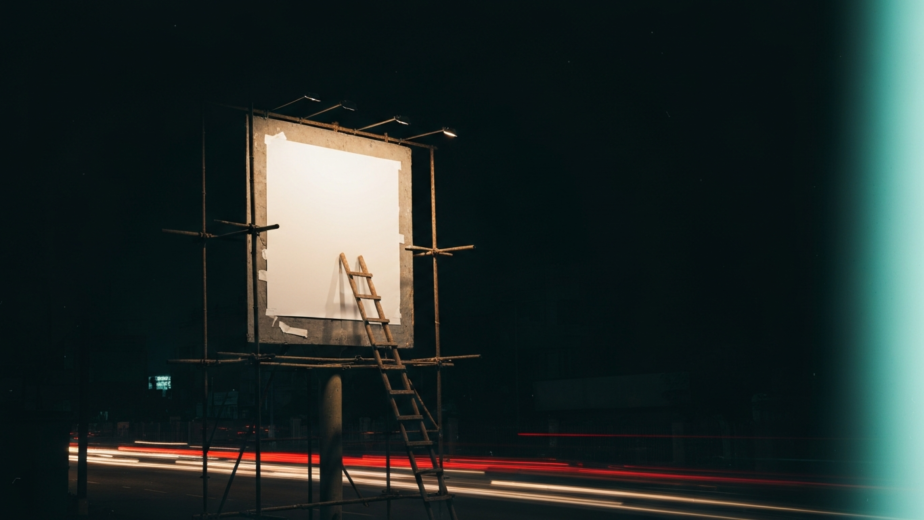
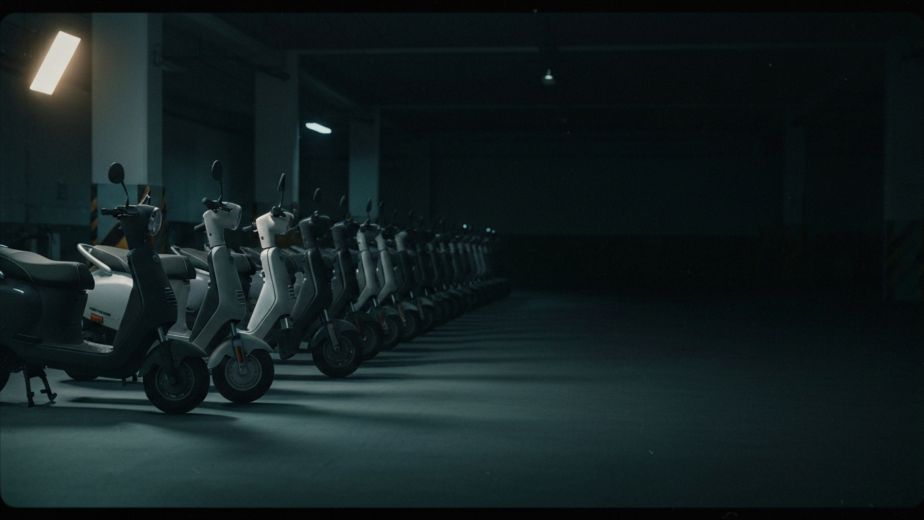
In 1989 Bajaj told India that a scooter was ours. In 2001 it told India that a motorcycle was definitely male. Twelve years, two taglines, two opposite ideas of what a vehicle is for. This gets taught as the greatest brand pivot in Indian advertising. Most of it was the economy changing, and Bajaj having the sense to change with it.
THE VERDICT: MIXED
Both ads are excellent. But ‘Hamara Bajaj’ is taught as proof that great advertising builds undying brand love, and the evidence says otherwise. It was made by a company with a ten-year waiting list, and Bajaj killed the product anyway sixteen years later. The pivot to ‘Definitely Male’ is the achievement. Reading the economy correctly, three times, is the skill.
Both ads are genuinely brilliant. That is not the argument.
The argument is about what people think the first one proves. “Hamara Bajaj” gets held up as evidence that a great campaign can make a country love a product. Look at the conditions it was made under and a less flattering explanation appears.
the waiting period for a Bajaj Chetak at its peak, before liberalisation. This is the market condition ‘Hamara Bajaj’ was made in, and the reason the campaign had no sales job to do.
Source: Wikipedia, ‘Bajaj Chetak’, which states that at one point the waiting period was 10 years, during the period the scooter was marketed under the ‘Hamara Bajaj’ tagline.
What was “Hamara Bajaj” actually selling?
Belonging. Not a scooter.
The campaign ran in 1989. Alyque Padamsee wrote it at Lintas. The jingle was “Buland Bharat ki Buland Tasveer, Hamara Bajaj”. The picture of a strong India, and it is ours.
Watch the ad and there is almost nothing about the machine. No engine size. No mileage. No price. It is a montage of Indians, across regions and generations, doing ordinary things with a Chetak somewhere in the frame.
That is a very specific choice. And it makes sense once you know what Bajaj was and was not competing with.
Why does a company with a ten-year waiting list need an ad at all?
It does not. That is the whole point.
At its peak, the waiting period for a Bajaj Chetak was ten years. Ten. People booked a scooter and received it when their children were in secondary school.
Bajaj was not trying to win a sale in 1989. There was no sale to win. Every unit it could build was already spoken for years in advance. This was the licence raj, and Bajaj was not a market leader so much as a rationing authority with a factory attached.
The Condition Nobody Mentions
A ten-year order book is not a market. It is a queue with a brand painted on it. Demand was not something Bajaj had to create, it was something policy handed it and the factory could not keep up with. Any campaign made under those conditions is doing a different job from the one your campaign has to do.
So what was the ad for?
Read it as what it was. A monopoly converting a captive queue into affection, before the queue disappeared. Somebody at Bajaj understood that liberalisation was coming and that a ten-year waiting list was not a moat, it was a temporary licensing artefact.
The bet was that if people felt about the Chetak the way the ad said they did, the feeling would survive the arrival of competition.
Bajaj was not trying to win a sale in 1989. There was no sale to win. It was a monopoly converting a captive queue into affection, before the queue disappeared.
Did the feeling survive?
No. Bajaj stopped making scooters in 2005.
Sixteen years after the most beloved ad in Indian television history, the company killed the product it was made for. Petrol Chetak production ran until 2006 and that was the end. The reason Wikipedia gives is flat and unromantic: rising competition from bikes and cars.
Consider what that means. India loved the Chetak. India said so. India then bought motorcycles the moment it had the choice.
The affection was real. It just was not worth anything at the point of purchase, because affection had never been what was moving units. Scarcity had.
What changed between “hamara” and “male”?
The pronoun. Which is to say, everything.
The Pulsar twins launched on 24 November 2001. Piyush Pandey wrote “Definitely Male” at Ogilvy. The launch film’s line was “It’s a Boy!”
Two taglines, twelve years apart, arguing opposite things
Hamara Bajaj (1989)
- “Hamara” means ours. A collective word.
- Sells belonging and national pride
- Says nothing about the machine: no engine, no mileage, no price
- Made for a market where you could not buy the product for ten years
- Excludes nobody. That is the entire point.
Definitely Male (2001)
- “Male” is a sorting word. It divides.
- Sells distinction and what the purchase says about you
- Sells the machine: performance, power, the sports segment
- Made for a market where the buyer had options and no obligation
- Excludes half the population on purpose.
Look at those two columns. They are not a brand evolving. They are a brand answering a completely different question.
“Hamara” means ours. It is a collective word. It works in an economy where you cannot get the thing, so the thing that matters is that it is Indian and it is yours by right.
“Definitely Male” is the opposite word. It is a sorting word. It works in an economy where you can get anything, so the thing that matters is what your purchase says about you specifically, and who it excludes.
Twelve years apart. Same company. That gap is India’s liberalisation, written in two taglines.
Was “Definitely Male” the better campaign?
Commercially, it was not close.
Bajaj kept the tagline unchanged for eighteen consecutive years, which almost nothing in Indian advertising manages. By 2011 the Pulsar was selling around 86,000 units a month and holding 47 per cent of its segment.
And it did something “Hamara Bajaj” never had to do. It created demand in a market where the customer had options and no obligation. That is a harder job than converting a waiting list into warm feelings, and it is the job every marketer reading this actually has.
THE BEST CASE FOR HAMARA BAJAJ
The campaign did something measurable that this piece cannot dismiss. It kept the Chetak name alive for fifteen years after the product died, and that stored equity is what made the 2020 electric relaunch viable. Bajaj did not have to buy awareness for a new nameplate in a crowded EV market, and it went from 4 per cent share to 20 per cent in three years. A new name would have cost money the old one did not. Alyque Padamsee also had no way of knowing liberalisation’s exact shape in 1989, so reading the ad as a calculated pre-liberalisation hedge is generous to Bajaj and unprovable. It may simply have been a very good ad.
Why did Bajaj dig up the name it buried?
Because it turned out to be the most valuable thing the company owned.
Bajaj unveiled an electric Chetak on 16 October 2019 and launched it in January 2020, initially in Pune and Bangalore. It brought back a nameplate it had discontinued fifteen years earlier, for a product category that did not exist when the original was made.
It worked.
Bajaj’s share of India’s electric two-wheeler market
Per cent of the e-2W market, by financial year
Source: Autocar Professional, reporting Vahan registration data, on Chetak crossing 700,000 cumulative sales. FY2026 is the first year Bajaj finished as India’s second-largest electric two-wheeler maker.
Bajaj held 4 per cent of India’s electric two-wheeler market in FY2023. That went to 11 per cent in FY2024 and roughly doubled to 20 per cent in FY2025, where it stayed in FY2026. Chetak volumes went from 1,11,713 units in FY2024 to 2,39,087 in FY2025, a 114 per cent jump, then 2,98,436 in FY2026. Cumulative Vahan retail sales through to 6 May 2026 are 7,27,779 units.
In FY2026 Bajaj finished a financial year as India’s second-largest electric two-wheeler maker for the first time.
So the sequence is this. Bajaj built enormous brand equity in a name. Killed the product. Spent fifteen years as a motorcycle company. Then found that the dead name was worth more than a new one would have been, in a category nobody had imagined.
That is the actual lesson, and it is not the one the case studies teach.
Can anyone build a “Hamara Bajaj” today?
No, and you should stop asking your agency for one.
Every few months an Indian brand briefs a campaign that is explicitly meant to be “the next Hamara Bajaj”. A national moment. A generational jingle. Something people will still hum in forty years.
Here is the problem. The conditions that produced it are illegal now, in the sense that the licence raj is over and no company gets a ten-year order book handed to it by policy. “Hamara Bajaj” is what a monopoly’s advertising looks like when the monopoly can see the end coming. You cannot brief that. You can only be granted it by an economy that no longer exists.
What you can brief is “Definitely Male”. A sharp, narrow, exclusionary idea about who the product is for, aimed at someone who has alternatives and does not have to care. It is less warm. It is less quotable at a national level. It sold 86,000 units a month.
Before you copy a legendary campaign, check what market it was made in. An ad written for a product with a ten-year waiting list is not solving your problem, whatever its awards say. And keep your dead brand names. Bajaj shelved the Chetak for fifteen years and the stored equity was worth more than a fresh nameplate when a new category appeared.
The ads you remember from childhood usually came from companies that did not have to compete very hard. Warmth is cheap to produce when there is a queue. What is expensive, and what actually moved Bajaj’s numbers, is a narrow idea aimed at someone who could easily buy something else.
The romantic reading of Bajaj is that a great ad made a nation fall in love. The useful reading is that Bajaj read three different economies correctly, thirty years apart, and was willing to abandon its most loved product in between.
That is a harder thing to put on a slide. It is also the only part of the story anyone can copy.
Sources: “Hamara Bajaj” origin, 1989, Alyque Padamsee at Lintas: afaqs. Chetak production years, the ten-year waiting period, the end of scooter production in 2005 and the electric relaunch unveiled 16 October 2019: Wikipedia, Bajaj Chetak. Pulsar launch date of 24 November 2001 and 2011 sales of about 86,000 units a month at 47 per cent segment share: Wikipedia, Bajaj Pulsar. “Definitely Male” attributed to Piyush Pandey at Ogilvy, launched 2001 and unchanged for 18 years, and the “It’s a Boy!” launch film: exchange4media. Electric two-wheeler market share by financial year, Chetak volumes for FY2024, FY2025 and FY2026, and cumulative Vahan retail sales of 7,27,779 units to 6 May 2026: Autocar Professional. This article is analysis and opinion about published campaigns and published sales data. Nothing in it alleges wrongdoing by Bajaj Auto or by any individual named.